Mistakes Most People Make with an Australian Shepherd

Updated: May 23
Most Aussie owners I've spoken to make the same handful of mistakes in the first year. Not because they don't care — quite the opposite. The breed comes with a reputation for being clever, energetic, and a bit dramatic, and that reputation hides a few traps. The dog that pushes back, paces, or starts herding the kids isn't being naughty. It's responding to something you set up without meaning to.
This guide covers the mistakes that come up over and over in Australian households — from suburban Sydney to the Tweed Heads coast — and what to do instead. None of this is about being a strict owner. It's about being a clear one.
Mistake 1: Treating Exercise as the Only Outlet
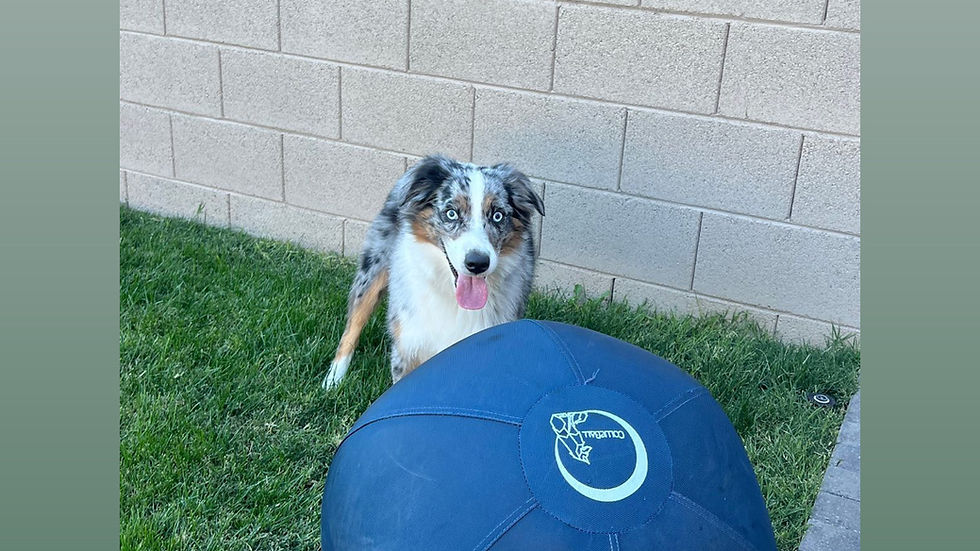
A long walk tires the body. It does not tire the brain. The most common mistake new Aussie owners make is assuming that a knackered-looking dog after an hour at the park is a content dog. By 6pm, they're pacing again.
Aussies were bred to think, watch, and react. Exercise without mental work creates a fitter dog with the same restlessness. Add scent games, puzzle feeders, trick training, or a herding ball session alongside the walk. See our enrichment guide for ten ideas that actually work.
Mistake 2: Not Teaching Them How to Settle
Aussies are not naturally good at switching off. They have to be taught. People assume an active dog will "crash" on their own. Most don't. Without a settle skill, they pace, whine, or follow you around the house looking for the next job.
Pick a mat or dog bed. Reward your dog whenever they choose to lie on it. Build duration over weeks. A dog who knows how to settle on cue is the calmest version of itself — at the café, in the car, on the deck while you read.
Mistake 3: Inconsistent Rules in the Household

One person lets the dog on the couch. Another doesn't. One says "down" for lie down, another says "down" for get off the couch. Aussies are clever enough to track all of it — and what they learn is that the rules are flexible.
Agree on the rules with everyone in the house before you bring the dog home, or as soon as you notice the drift. Use the same words for the same things. Be willing to repeat a cue calmly twenty times rather than escalate.
Mistake 4: Using Harsh Corrections
Australian Shepherds are sensitive dogs. Yelling, jerking the lead, or physical corrections shut them down. You'll see it — they go flat, stop offering behaviour, look away. The bond degrades quickly.
Reward-based training works better for this breed than any other approach. Reward what you want. Calmly interrupt and redirect what you don't want. Most owners find this faster than the old-school correction methods anyway.
Mistake 5: Letting Them Herd the Kids

Aussies will try to herd anything that moves — children running in the yard, the cat, smaller dogs at the park. People laugh at it for the first few weeks. Then the nipping at heels starts. Then a child gets a bruise.
Interrupt the herding pattern early. Teach a solid "leave it" and "come". Give the herding drive a legitimate outlet (a ball, scent work, structured training) so it doesn't get directed at small humans. Don't punish — redirect.
Mistake 6: Getting Socialisation Wrong
The pendulum swings both ways. Some owners throw their Aussie pup into every dog park, café, and family barbecue in the first three months and end up with a reactive teenager. Others wait too long and end up with a dog that flinches at strangers.
Aussies do best with controlled, positive exposure — calm dogs, predictable environments, short sessions that end before the pup is overwhelmed. Quality over quantity. If your pup is hiding behind your legs, you've gone too fast. Back off and try smaller doses.
Mistake 7: Underestimating the Australian Climate

Aussies have a thick double coat built for working in cold mountain weather. Most of Australia is warmer than that. Owners new to the breed often work the dog through the middle of a Queensland or NSW summer day and end up with a heat-stressed, panting animal.
Move outdoor sessions to early morning and late afternoon. Use indoor enrichment through the middle of the day. Watch for the tongue going wide and flat, slow recovery, or the dog refusing to keep going — those are signs to stop and cool down. Don't shave the coat; the undercoat insulates against heat as much as cold.
Mistake 8: Giving a Puppy Free Reign Too Early
Letting an Aussie puppy roam the whole house unsupervised from day one is asking for chewed skirting boards and bad habits. Aussies are curious and busy. If you don't manage their environment, they'll find their own entertainment, and you won't like it.
Use baby gates, an exercise pen, or a crate to keep the puppy in the room you're in. Slowly give more space as they earn it. This isn't restriction — it's setting them up to succeed.
Mistake 9: Skipping the Breed-Specific Health Conversation

Australian Shepherds carry a few breed-specific risks that not every vet brings up unprompted — the MDR1 gene (which affects how certain medications are metabolised), hip dysplasia, and eye conditions like CEA. An owner who knows the names of those things can ask better questions at the first vet visit.
Ask about MDR1 testing if your dog hasn't been tested. Mention the breed when any medication is prescribed — some common drugs have to be dosed differently or avoided. Don't panic; just be informed.
Mistake 10: Confusing Boredom with Bad Behaviour

The Aussie who chews the doorframe, paces at dusk, barks at every passing car, or starts to redirect on the cat — almost always — is a bored Aussie, not a bad one. Punishing the behaviour without addressing the underlying need just creates a quieter, more frustrated dog.
Before you label a behaviour as a training problem, look at the dog's day. Did they get mental work? Did they have a chew or a puzzle? Did they nap properly? Most of the "bad behaviour" complaints clear up when the enrichment side gets sorted.
Where to Start This Week
Pick the two mistakes on this list that match your dog right now. Fix one this week. Fix the other next week. Don't try to overhaul everything at once — Aussies adapt faster to small, consistent changes than to a sudden reset.
For breed background, our Australian Shepherd owner's field guide walks through what to expect across the first year. For the daily mental work side of it, enrichment ideas for Australian Shepherds gives you ten things to rotate. And if you want to add a herding outlet, the 75cm CollieBall is built for the breed — size guide here if you're unsure which size fits.
This guide reflects how Australian Shepherds tend to respond to common owner mistakes and what tends to work. It is not a replacement for veterinary or behaviour advice. If your dog shows persistent reactivity, aggression, or anxiety, talk to a qualified force-free trainer or your vet first.
Ships from Tweed Heads NSW.


Comments