High-Intensity Activities for Working Herding Dogs (AU Guide)

Updated: May 26
Some herding dogs are genuinely hard to tire. Working-line Border Collies, Kelpies in their prime, working-line German Shepherds, athletic Cattle Dogs — these dogs aren't satisfied by an enrichment puzzle and a walk. They need real intensity, and the kind of intensity that builds capacity rather than burning the dog out.
This guide is for owners whose dogs are at the upper end of the working-breed energy scale. If your dog settles fine with standard activities, our general activities guide covers the basics. This one goes a level deeper.

High Energy Doesn't Mean Endless Cardio
The instinct with a high-energy dog is to throw more cardio at it. Long runs, long fetch sessions, two-hour walks. It works for a week. Then the dog acclimates, and you need three hours instead of two. You're building an athlete, not settling a dog.
High-intensity activities tire a working dog because they combine physical demand with cognitive load and emotional engagement. The dog has to think hard while moving hard. That's what burns the reserves.
High-Intensity Activities That Build Capacity (Not Burnout)
1. Treibball (Push Ball Sport)
The formal sport version of herding ball work. The dog pushes large balls into a goal under handler direction — directional cues, sequential targets, distance control. It's mentally demanding because the dog has to read commands from a distance and choose between targets.
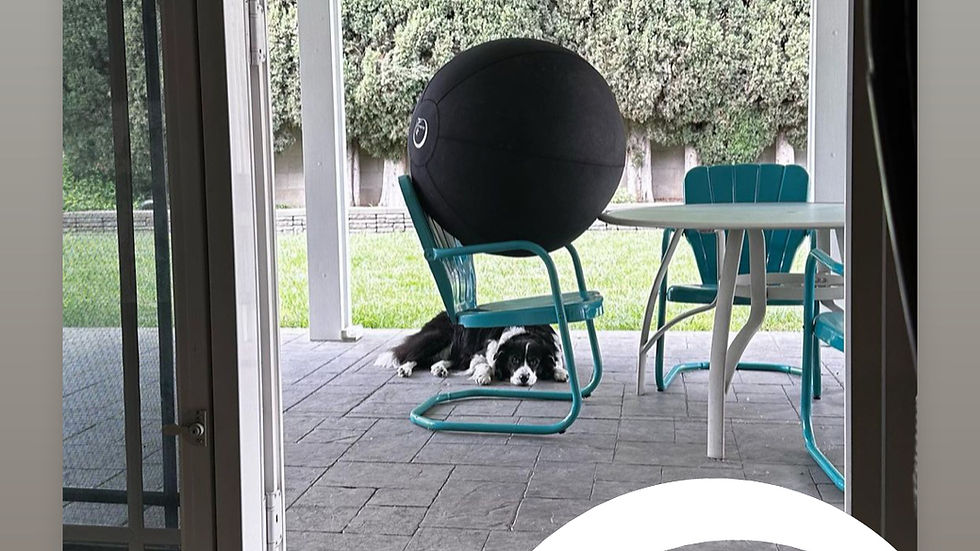
You can do informal treibball in a backyard with a 55cm or 75cm CollieBall. Set up two markers, send the dog to push the ball between them, build up to multiple balls.
2. Agility (Course, Not Just Equipment)
Putting a dog through a tunnel once isn't agility. Agility is a sequence — jump, tunnel, weave, contact, jump — run at speed with the handler directing from a distance. The dog has to read body language and verbal cues simultaneously while moving at full speed.
Most cities have an agility club. Start at foundation level even if your dog seems advanced; the foundation work is where speed and accuracy come from.

3. Scent Detection / Nose Work Sport
More demanding than backyard scent games. The dog searches a defined area for a target odour (birch, anise, clove are standards) and indicates by holding position. Scent detection is the single most tiring 45 minutes you can give a working dog.
Australian Nose Work Association and similar clubs run trials. Start with one odour and short searches before scaling up.
4. Herding Instinct Class or Stockwork
If you're close to a working dog club or trial venue, putting your dog on actual stock — even just an introduction session — is unlike anything else. Sheep don't care about your training cues. The dog has to read the stock, the handler, and the situation simultaneously.
Not every dog is suited. Some shut down, some get too aroused. A good herding instructor will tell you within one session whether your dog has the wiring for it.
5. Bikejor or Canicross
The dog pulls in front while you ride a bike (bikejor) or run (canicross). It's structured cardio with a job attached — the dog has to maintain pace, follow trail cues, and respond to directional commands. Common in Europe, growing in Australia.
Requires a properly fitted harness (not a regular collar) and a dog over 18 months with sound joints. Talk to your vet before starting.
6. Disc Dog (Frisbee Sport)
Not casual fetch with a frisbee. Real disc dog involves long-distance throws, mid-air catches, and routines of multiple discs in sequence. Mentally demanding because the dog has to track multiple discs, choose, and time the jump.
Joint stress is a real concern at speed and height — keep jumps low and surfaces soft until the dog is fully mature.

7. Long Hikes With a Pack
Not a flat walk. A 2-3 hour hike on varied terrain with a properly fitted dog pack (carrying its own water and snacks) gives a working dog real endurance work without the joint impact of running on hard ground. Trail variety — gradient, surface change, scent challenges — adds cognitive load on top.
8. Structured Trick Training (Complex Chains)
Single tricks bore a working dog fast. Chains do not. Teach the dog to fetch a specific named object from another room, bring it to a marked spot, and ring a bell to announce completion. Multi-step chains keep the brain working for 20-30 minutes at a time.
Building Capacity Without Burning Out
Three rules for high-energy breeds:
Rest days matter. A working dog that runs hard every day is a working dog with shorter career. Two genuine rest days a week (low-intensity walks, settle work, recovery).
Cross-train. Same sport every day causes repetitive strain. Rotate physical (agility, hikes) with cognitive (nose work, treibball) with calm (scent mats, training).
Watch for over-arousal. A dog that can't switch off after activity is overstimulated, not under-exercised. Add settle work, reduce intensity, look at sleep quality.
Australian Conditions
High-intensity work in Australian heat is the easiest way to put a young dog into heatstroke. Hard cardio above 25°C is risky for a coated breed; above 30°C it's dangerous. Move sessions to dawn or dusk in summer, swap outdoor sports for indoor scent work, and check paw temperature with the seven-second hand test.
Vet Disclaimer
Sport-level activities should start after the dog is physically mature (12-18 months depending on breed). Repetitive impact on growth plates causes long-term joint issues. Get a vet check before starting any new sport, and especially if your dog already has soft-tissue or joint history.
Where to Next
If you're not at sport-intensity yet, start with our general activities guide — those activities are the foundation that everything here builds on.
If your high-energy dog is also reactive or struggling to settle, the issue is rarely "not enough exercise." Our calming guide walks through that distinction.
And the CollieBall complete package — useful at every intensity level from beginner to treibball sport — ships in 4 sizes from our Tweed Heads NSW base.


Comments